
The process of getting dental implants isn’t just a journey to restoring your healthy, beautiful smile. It’s a learning process too. Between discovering how to care for your new prosthetics to ensure they last a lifetime to understanding how new terminology can affect your results, there’s a lot of material to cover! Here are a few new words and concepts you may hear your dentist use in the coming weeks and months, and how they will impact your smile makeover!
Abutment
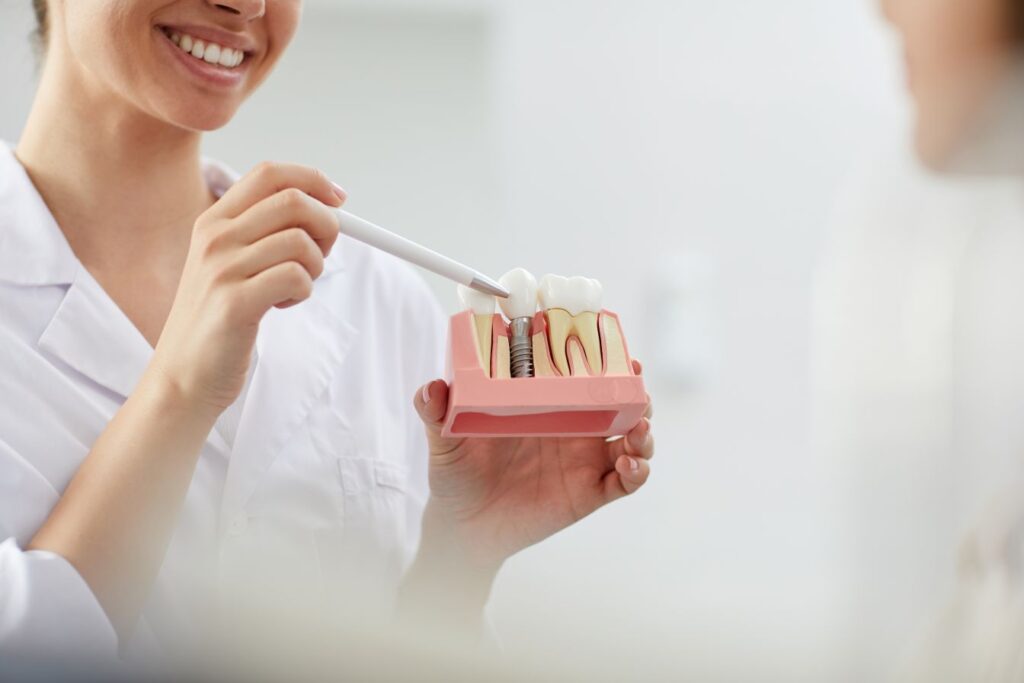
The abutment of your dental implant is the piece that connects the implant post to the crown, bridge, or denture to secure it in place so you can eat, speak, and smile without worrying about it coming loose or falling out.
Crown
The crown refers to the actual tooth portion of the dental implant that is visible above the gumline and restores the appearance of your smile. While a crown typically refers to a single tooth, these prosthetics are also available in different sizes including bridges (which contain several teeth) and even dentures (which can replace an entire arch of teeth).
Endosteal Implant
Endosteal implants are the most commonly used dental implants. They are surgically attached to your jawbone via a series of small screws, blades, plates, or cylinders that can hold at least one dental crown.
Eposteal Implant
Patients who have a weak jawbone or high risk of bone resorption may require an eposteal implant. These prosthetics sit directly on your jawbone and require less density than endosteal implants.
Implant Dentures
Implant dentures are a more affordable way to replace an entire arch of teeth and combine the permanent look and feel of dental implants with the convenience of a traditional denture. In some cases, you can even secure them with as little as four posts!
Osseointegration
Osseointegration is an important concept. It is the process of your dental implant permanently fusing with your jawbone and improving its strength. In fact, the term comes from the Greek and Latin words “bone” and “to make whole.”
Subperiosteal Implant
Subperiosteal implants are an excellent option for patients with minimal bone height and those who can’t wear traditional dentures. They are basically posts that sit atop the jaw and protrude through the gum tissue to hold your dental implant in place.
Titanium
Titanium is the material most used for dental implants. It has the benefits of being durable, has a low risk of allergic reactions, and is very lightweight. It also has an excellent track record of successful fusion with the jawbone, making it one of the most secure options for dental implants, along with zirconia.
Zirconia
For those patients who are allergic to titanium but still want a beautiful, permanent tooth replacement, zirconia can be an ideal option. Zirconia inhibits bacteria growth which can benefit your periodontal (gum) health, and thanks to its natural white color, it blends in very naturally with your existing teeth.
Now that you know the meanings behind some commonly-use dental implant terms, it’s time to go out there and define that beautiful smile. To learn more about dental implants and how they can restore your gorgeous grin back to its original glory, schedule a consultation with your dentist today!
About Our Practice
At Holger Dental Group, our team of talented dentists wants to help you define your smile. Whether you’ve already had dental implants or you’d like to learn more about how these dynamic prosthetics can change your life and your smile, schedule a consultation with us today to get started. We can be reached at 952-222-5266 or send us a message through our website!