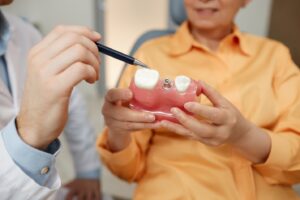
Your dentures have served you well, but are you ready for an upgrade? If you’re tired of wobbly teeth that slip each time you talk or eat, it may be time to consider a more permanent solution: dental implants. The transition might seem like a lot, but your dentist will make sure you understand what to expect and how you can go from frustrated to fulfilled. Keep reading to learn more about the switch and how to keep your new teeth healthy.
Why Do Patients Become Dissatisfied with Dentures?
The most common reasons patients tend to become frustrated with their dentures include:
- Dentures regularly slip, causing embarrassment, especially in front of others
- Dentures require messy adhesives to keep them securely in place
- Dentures restrict a person’s diet, making it harder to eat foods they once enjoyed
- Dentures can cause gum sensitivity and soreness over time
- Dentures require regular cleaning that can become tedious
Switching to dental implants gives patients the chance to restore and rebuild their smile permanently. This means a stronger bite force to eat a varied diet of nutritious foods, greater jawbone stimulation that helps prevent facial collapse and tooth loss, better oral health because dental drift is less likely to occur, and even longer-lasting results that one can enjoy for decades.
Dentures to Dental Implants: What Happens?
A dentist will follow a few specific steps when preparing a patient for dental implants:
- Bone Grafting: Most patients who wear dentures need bone grafting to increase the density of the underlying jawbone. This involves incorporating grafting materials into the existing bone so they can integrate and create a firm foundation for dental implants.
- Dental Implant Placement: Once healed after bone grafting, a person will undergo minor oral surgery, which requires placing dental implants into the jawbone. The number of implant posts required is based on how many teeth need to be replaced. A full implant denture uses 4-6 titanium posts, while a partial implant denture may need only 2 or 3.
- Osseointegration: Dental implants must fuse with the bone in a process that can take 3-6 months. This creates a stable foundation for the new prosthetics and supports the custom denture.
- Placing the Final Denture: After everything is healed, the last step is placing the final denture. It attaches to the dental implants, giving patients a permanent smile they can use and enjoy more comfortably and confidently than before.
Once a person begins their new journey with dental implants, they will need to maintain their smile with regular oral hygiene habits and biannual visits to the dentist’s office. Since they can be treated like natural teeth, they require fewer steps to keep them clean and healthy year-round.
About the Practice
Holger Dental Group’s three qualified, talented dentists care for the whole patient, not just their smile. We offer first-class care and lasting results, including superior dental implants for those experiencing tooth loss or looking to upgrade from traditional dentures. If you are tired of your teeth slipping and dietary restrictions, visit our website to schedule an appointment.