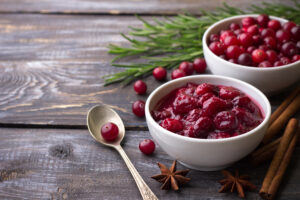
Whether it’s homemade with whole berries or sliced straight from the can, cranberry sauce is a fixture on many holiday tables. While you’re busy passing the turkey and stuffing, you might not give much thought to what that ruby-red side dish is doing for your teeth. As it turns out, cranberries have some surprising perks for your smile, along with a few catches worth knowing about. A little awareness, combined with good preventive dental care, can help you enjoy the season without worry.
The Good News: Cranberries Fight Plaque
Cranberries are packed with natural compounds called proanthocyanidins, or PACs, which give the berries their deep red color. Research suggests these compounds have a unique “anti-stick” effect, making it harder for harmful bacteria to cling to your teeth and form plaque.
Laboratory studies have found that cranberry PACs can interfere with the bacteria most responsible for tooth decay, as well as those linked to gum disease. PACs also appear to have anti-inflammatory properties, which may help calm irritated gums. While more research in people is still needed, these findings make cranberries one of the more interesting fruits when it comes to oral health.
The Catch: Sugar, Acid, and Stains
Unfortunately, cranberry sauce isn’t quite the same as a handful of fresh berries. Because cranberries are naturally very tart, most recipes and store-bought sauces contain a lot of added sugar. That sugar feeds the bacteria in your mouth, which then produce acids that wear down enamel and lead to cavities.
Cranberries are also acidic on their own, which can temporarily soften enamel. On top of that, the same deep pigments that make cranberries so beneficial can also stain your teeth, especially if you already have some surface discoloration.
How to Enjoy Cranberry Sauce the Smile-Friendly Way
You don’t have to skip this holiday favorite. Just keep these simple tips in mind:
Make it from scratch. Homemade sauce lets you control the sugar, and any sauce made with real cranberries still contains those helpful pigments.
Enjoy it with your meal. Eating cranberry sauce alongside other foods, rather than snacking on it throughout the day, limits how long your teeth are exposed to sugar and acid.
Rinse with water. A quick swish after dinner helps wash away sugar and pigments before they can settle in.
Wait to brush. Give your enamel about 30 minutes to recover from acidic foods before you brush, so you don’t scrub softened enamel.
Load up on tooth-friendly sides. Other holiday staples pull their weight too. Turkey provides phosphorus to help protect enamel, while sweet potatoes deliver vitamins A and C for healthy gums.
Keep up your routine. Brushing twice a day, flossing daily, and visiting your dentist regularly matter more than any single food on your plate.
About the Practice
Holger Dental Group proudly serves patients from two convenient locations in Minneapolis and Minnetonka, MN. Led by Dr. Holger Meiser, Dr. Rochelle Akradi, and Dr. Kate Topuz, the team focuses on preventive care that keeps smiles healthy through the holidays and all year long. To schedule your next checkup, call the Minneapolis office at (612) 333-8988 or the Minnetonka office at (612) 333-8988, or click here to contact the team.